Antarctica Day in Estonia
December 1st is celebrated as Antarctica Day around the world because that is the day when the Antarctic Treaty was signed in 1959, dedicating Antarctica to peace and science. It is also the day when the Estonian Polar Club was established in 1984 - these kinds of clubs were an extreme rarity at that time, but somehow managed to get permission to operate under the Estonian Maritime Museum. It is also the day when in 2017 Ross Sea Marine Protected Area entered into force (signed in 2016) - this is the last time CCAMLR was capable of passing a decision on an MPA. Three other proposed MPAs have not been able to gain a consensus vote despite very solid scientific grounds due to some Parties’ dedicated obstruction of protection measures.

Birgit Njåstad speaking to the audience in the beautiful hall of the Estonian Academy of Sciences. Click on the picture to access the video recording of the day.
To celebrate the core values of peace, science and environmental protection that the Antarctic Treaty upholds, look back at Estonia’s scientific engagement and discuss what this should look like in future, and analyse the complicated geopolitical situation of polar politics, we have organised a half-day symposium in the Estonian Academy of Sciences. Dreamed up during the Milan ATCM, the Symposium united all major stakeholders of Estonian polar affairs. It was organised in collaboration between the Polar Research Committee of the Estonian Academy of Sciences, Estonian Ministry of Foreign Affairs, Estonian Ministry of Climate, and Estonian Polar Club. It was a pleasure to welcome the former CEP-chair and a true expert on Antarctic environmental protection, Brigit Njåstad from the Norwegian Polar Institute, to Tallinn for a keynote speech. Equally valuable was the participation of all our international and local panelists. (Click on the picture above to access the recording of the day!)
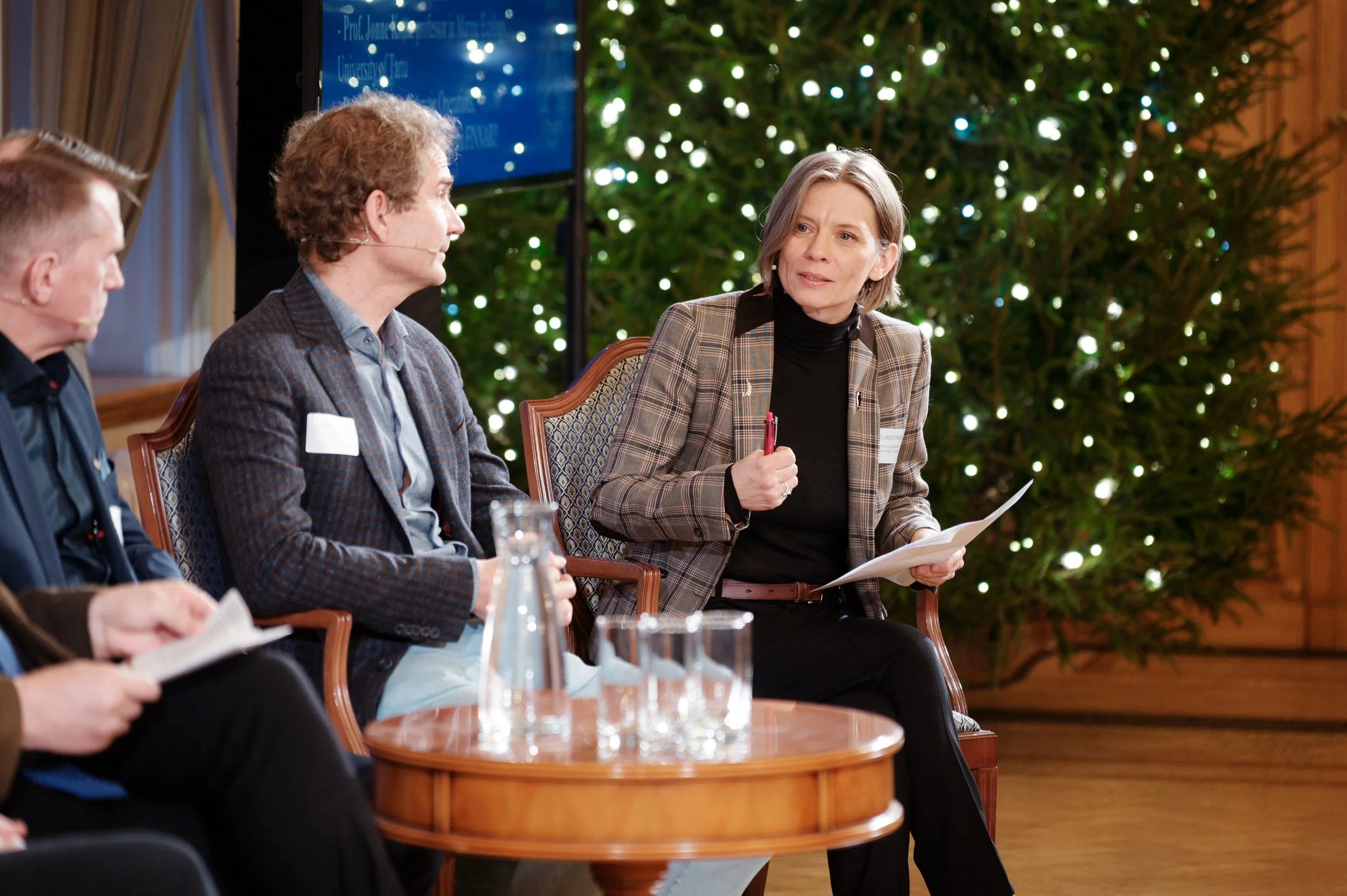
For myself, this meant chairing a panel on Antarctic Environmental Protection, Climate Change and Europe, several media engagements (including appearance in the morning program of Kanal 2, see 59:30 ff) and supporting the social media campaign of the institutions with expert advice. While we obviously cannot solve the geopolitical deadlock of the Antarctic Treaty System, we could hopefully contribute to increased awareness of the Antarctic politics, particularly the Madrid Protocol, and the needs of Antarctic science in Estonia.


